|
Click here for our review of "The Scottish Colourists" at the Kelvin Grove Museum and Art Gallery in Glasgow, Scotland.
Click here for our review of "Obsession: Klimt, Schiele and Picasso from the Schofiled Thayer Collection" at the Met Breuer in New York City.
Click here for our review of "Thomas Gainsborough Experiments in Drawing" at the Morgan Library and Museum in New York City.
Click here for our review of "Grant Wood: American Gothic and Other Fables" at the Whitney Museum of American Art.
“Charles II: Art & Power” at the Queen's Gallery (London) looks at the role of art in the reign of King Charles II (1660 to 1685). Charles II's reign was shaped by the English Civil War. Charles's father, King Charles I, sought to be an absolute monarch. However, he came to the throne as the power of Parliament and democracy was growing in England. Eventually, this led to civil war. Charles I lost and was beheaded in London in 1649. Parliament declared the monarchy abolished and established England as a Commonwealth with Oliver Cromwell, the leader of the parliamentary army, as Lord Protector. Both to raise money and to do away with the trappings of monarchy, the royal regalia, furnishings and art collection were sold or melted down. The Commonwealth quickly fell apart following Cromwell's death. Unable to find a leader to replace Cromwell, Parliament reinstated the monarchy and invited Charles II to return from exile. Although he was welcomed back to England with great fanfare and popular sentiment, Charles realized that his position was precarious. He had seen the consequences of his father's absolutist attitude. In addition, while he was in exile, he had had to journey from country to country as various rulers' attitudes shifted from being Charles' allies to wanting to curry favor with Cromwell. As a result, Charles realized that he needed to create a public image that would help secure his position as king. One of the tools that Charles used to build this public image was art. Upon his return, Charles had an elaborate coronation. Since the royal regalia had been destroyed by the Commonwealth, he commissioned new regalia. The sumptuous pageantry connected him to the monarchs of the past and helped legitimize his reign. In addition, the Commonwealth had been heavily influenced by Puritan thinking and the people appreciated the colorful and lively ceremony. Charles and his court also commissioned works of art. Portraits showing the king, his family and his various mistresses in silks and elaborate finery hung in the various royal palaces. These were not done just for vanity but also to show that Charles and his court belonged in these palaces. At this time, collecting prints was becoming popular in England. It was the social media of the day. People purchased prints of Charles and displayed them in their homes. They were also entertained by tales of the various intrigues that were going on at court and enjoyed seeing prints of the portraits of the participants. Charles was also eager to re-build the royal art collection. His father had been a renowned collector. But beyond family sentiment, Charles wanted a first rate collection because such a collection would place him along side the established monarchs of the day. Therefore, a law was enacted calling for the return of works that had been sold by the Commonwealth. In addition, Charles purchased old master paintings and drawings. His collection grew further as a result of gifts from from other nations and courtiers seeking to ingratiate themselves with the king. Using works from the Royal Collection, this exhibition does not merely display works from the time of Charles II but presents them so that their use as a tool of the king is clear. The signage and the audio guide (included in the price of admission) also help to support the presentation of the thesis of the exhibition. Unlike his father who had had the services of Sir Anthony Van Dyck, Charles did not have an artist of genius to do his portraits. Sir Peter Lely and his contemporaries were good draftsmen but their portraits are chiefly of interest because of the people depicted rather than as independent works of art. The difference between the work of good artists and artists of genius is brought home by the examples of old master paintings and drawings collected by Charles II. These works, including works by Titian and Holbein, have an indefinable quality that the Restoration works do not. 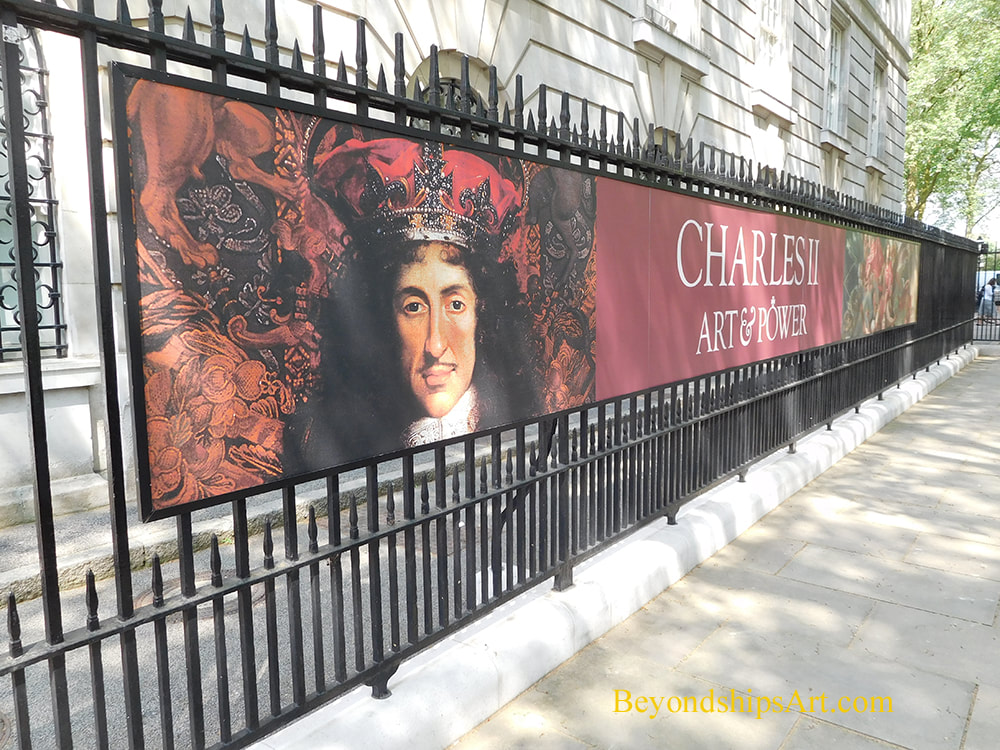  “Birds of a Feather: Joseph Cornell's Homage to Juan Gris” at the Metropolitan Museum of Art is a small exhibition that brings together a dozen of Cornell's shadow boxes along with the painting by Juan Gris that inspired Cornell. Joseph Cornell was born in 1903 outside of New York City. He was the eldest of four children. When his father died in 1916, the family was left in bad financial circumstances and had to move into the city. Joseph dedicated most of his life to supporting the family including a younger brother who had cerebal palsy. Painfully shy, Cornell never married and had few relationships and friendships. Cornell had little formal education. However, he was well-read and interested in cultural activities. Accordingly, he spent much of his free time exploring museums and art galleries. As a result, he began to develop his own art. The primary medium used by Cornell was the shadow box. He would take various objects that he discovered on his trips around New York and assemble them together. These juxtapositions of found objects had a surrealistic flavor and he was embraced by the Surrealists and New York's artistic community. On one of his visits to an art gallery, he saw a painting by Juan Gris that he found striking. Gris was born in Spain in 1887 but moved to Paris in 1906 where he became part of the avant garde scene. Although not the inventor of Cubism, he brought that style forward and developed it. The work that inspired Cornell was “The Man at the Cafe.” In it, Gris depicted the criminal mastermind in a popular series of novels. This shady character is almost entirely obscured by the newspaper he is reading. The shadow from his fedora blocks out his face. Wood grained paneling mixes the background and the figure. Done in the Cubist style, it is divided into geometric planes. Cornell made 18 shadowboxes, two collages and a sand tray in the series inspired by Gris' painting. Like Gris' painting, he incorporated printed pages and trompe l'oeil wood grain in these works. There is also a central figure but instead of a criminal mastermind, the figure is a cockatoo. The shadow boxes are much smaller than Gris' painting. Consequently, they are much more intimate visually. Thus, while they may be rooted in the painting, they are a much different visual experience. 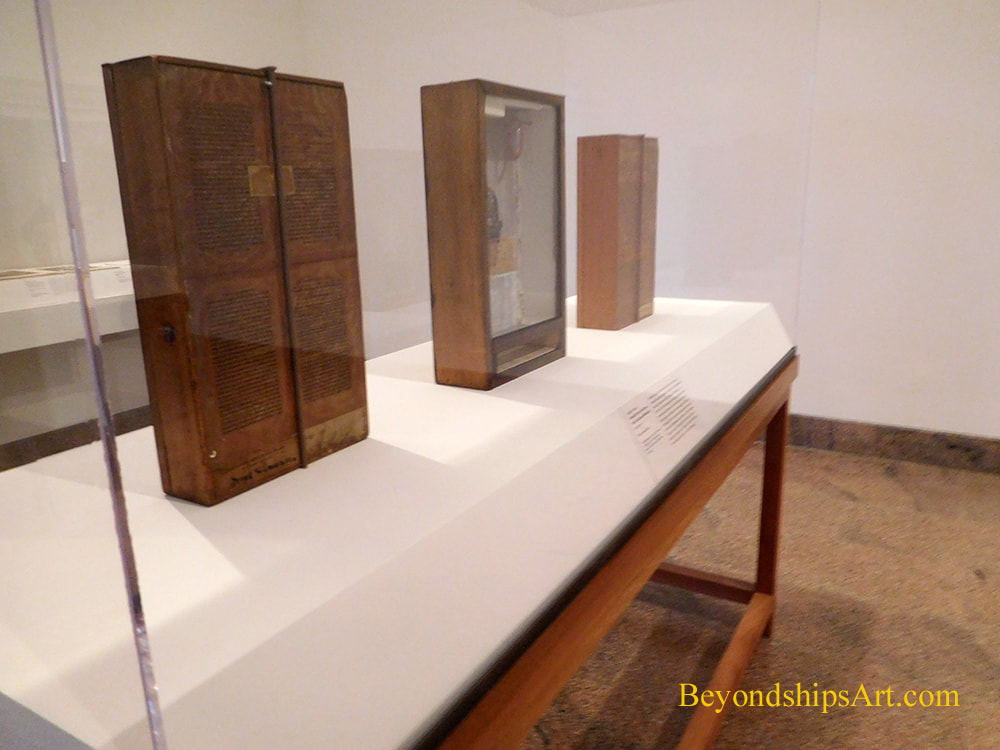 |
AuthorRich Wagner is a writer, photographer and artist. Archives
November 2018
Categories
All
|
 RSS Feed